Posts

Showing posts with the label 1 star

Mid-Century Dystopia, Part 2: Nineteen Eighty-Four

Image
Nineteen Eight-Four marks the third famous classic to disappoint me in recent years.  Along with The Odyssey and The Divine Comedy , it would have been left unfinished early on, except for its mammoth legacy and the feeling that I ought to read it.  It's possible I lack the maturity or life experience to appreciate these books - I leave that open as an explanation.  But for the time being, I'll express my unpopular opinion, which isn't without basis.  (For my personal dystopian literature criteria, see part 1 .) England, Except Not England Winston Smith, our very Britishly named protagonist, resides in England of the 1980s.  Now called "Airstrip One," England is a mere drop in the empire that is Oceania, and its once-vivid culture has likewise been largely eaten up by the propaganda of the ruling one-party state.  All citizens are expected to revere Big Brother, the vague yet menacing figurehead of the Party, and in so doing are closely monitored ...
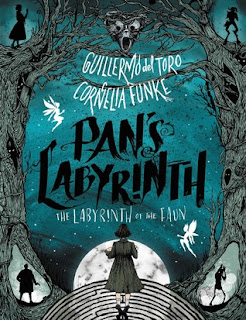
Mid-Century Dystopia, Part 1: Pan's Labyrinth

Image
There was no intention on my part to read two dystopian novels at the same time.  I was already in motion to read 1984 - an embarrassingly long-overdue attempt - when I heard a novelization of Pan's Labyrinth was to be released in July.  I got in the library line quickly (these things go like hot cakes), and soon, with del Toro/Funke's fantasy horror in one hand and Orwell's bleak dystopia in the other, made the abrupt leap from "light summer fluff" to "not-sure-if-I'll-sleep-tonight bedtime stories." So... What Were You Thinking!? 1984 requires little introduction.  In Western culture, at least, terms such as Big Brother and doublethink flavor our vocabulary as glib reminders that a British author back in 1948 foretold the existence of increasingly powerful, monolithic, and tech-savvy governments.  We see signs of it everywhere today, from more innocuous instruments such as traffic cameras to the disturbing birth of China's Social C...

The Professor - Charlotte Bronte's First Novel

Image
Portrait by J. H. Thompson First novels can be hit-and-miss, even those of "great authors."  Nathaniel Hawthorne was so ashamed of Fanshawe he wanted all copies burnt.  Jane Austen's Love and Friendship , written in her teens, did not (unsurprisingly) carry the depth and drama of her later, famous novels.  Doyle's first Sherlock Holmes novel, A Study in Scarlet , is arguably one of the weaker of the four.  While some talented authors debut a masterpiece, it's as equally likely that their first book is not their best. All of this goes to show that 1) no one is born a great novelist, and 2) it is worthwhile to keep trying, even if your first writing is highly flawed. The Professor was Charlotte Bronte's first novel but not published until after her death.  It has a very similar plot to Villette (1853), and it's best read as a first draft of that superior novel.  Unfortunately, this is still insufficient for enjoying the book, because it's just ...

February Reviews - Lightning Round!

Image
Tender Is the Night - F. Scott Fitzgerald - (no rating) Biggest disappointment of the year so far; did not finish. The Atlas of Beauty - Mihaela Noroc - 3 stars An interesting library book.  Somewhat repetitive; would've  preferred less social-political commentary. Embers - Sándor Márai - 4 stars Surprisingly great!  European history buffs will appreciate  this ruminating novel.  Full review here . Poetry of the First World War - ed. Marcus Clapham - 3 stars Not an easy or pretty read, but a sobering one.  More thoughts here . Moonflower - Jade Nicole Beals - 4 stars   Poems of peace and introspection; this was a refreshing read. Anthem - Ayn Rand - 2 stars Great concept, so-so execution.  Full review here . Breakfast at Tiffany's - Truman Capote - 1 star Writing style on point, story not my cuppa.  More thoughts here . This has not been the month for in-depth, written reviews, and I'm feeling a bit sheepish about that.  Work ha...

The Sound and the Fury: Meeting Faulkner

Image
Faulkner's portable typewriter - Gary Bridgman [ GFDL , CC-BY-SA-3.0 or CC BY-SA 2.5-2.0-1.0 ], via Wikimedia Commons Every so often (e.g. while watching Jeopardy! ), I get a reality check and remember there are so many classics I haven't yet read.  As with geography, there are whole regions of classics that are entirely unfamiliar to me, or only half-explored.  This year I've taken a step in the right direction by reading an author brand-new to me, and that author is William Faulkner. Faulkner's The Sound and the Fury is one of his most beloved novels, and it seemed like a good choice for a newbie.  The story describes the decaying fortunes of the Compson family, once prestigious Southern landowners who now live in dwindling esteem in the 1920s.  What they have left to their name is essentially a whole lot of problems: a sickly, haughty mother, an aloof father, and four children with varying degrees of affection for each other and their parents.  Intermingle...

Angst and yawns in Ishiguro's Nocturnes

Image
I bet someone's said it before, so I'm repeating it now - this one's a snooze... Don't get me wrong. I really enjoyed The Remains of the Day , and An Artist of the Floating World is one of my all-time favorite novels. I appreciate Ishiguro's writing in its most subtle and emotive form, which is what I came to expect from those two books. Like The Buried Giant , however, Nocturnes ended up disappointing high hopes. This collection is subtitled "Five Stories of Music and Nightfall," yet the first three stories are really rehashes of the same plot, which is more about marital discord (no pun intended) than making music. The best of these three (though admittedly the most dismal) is "Malvern Hills," a peek in the life of two folk musicians and their joys and sorrows. As for the last two stories, though the relationship problems took the backseat, the main storylines were not all that intriguing and rather anticlimactic. Side note: there is quite a ...

Werther: Sorrows, Joys, and Other Sturm und Drang

Image
Wilhelm deserves the reader's pity.  Not only is his name easily confused with the village of Wahlheim - a central location in Werther's tale - but his sole role is to play the long-suffering audience to Werther's letters of ecstasies, angst, and other sorrows.  Wilhelm listens attentively, offers his best advice to his friend, and ends his part in the story with a sense of utter helplessness and futility.  At least the audience is not alone. Perhaps I was biased by having already known the plot of Johann Wolfgang von Goethe 's most famous novella, The Sorrows of Young Werther .  Even its German Romanticism, however, cannot save this book from 1 out of 5 stars .  The story centers around the title character, Werther, who is a head-in-the-clouds, rather obstinately unemployed young man, with the added misfortune of having fallen in love with a woman already engaged.  This would be Charlotte, whose fiance Albert even Werther cannot dislike, but simply envy....

Monstrous Societies

Image
© Brocken Inaglory I haven't purposely adhered to the current "dystopian novel" trend, yet my three latest reads have all held striking elements of it. First is the famous Utopia , a complete contradiction to its name.  This was a really bad book, to put it simply.  The fictitious island of Utopia is a society of Mary Sues, where everyone is so good and kind and noble-hearted.  It made me sick.  Not because I don't like nice people, but because these are phony, utterly unrealistic nice people.  Plus, they're not as nice as they look.  They think slavery and arranged families and shared houses are ok--well, not only ok, but just splendid.  The more I read, the more I noticed another disturbing trend: elderly guys are at the top, women and children (and slaves) are at the bottom.  Gerontocracy, I think.  Religion in Utopia is a bona fide mixing of faiths where everyone worships at the same church, and if your beliefs extend beyond a "one size f...